

Noncancerous Mole Removal
Start with primary care for support, guidance, and next steps.


Helping you decide when to remove a mole
Moles (nevi) are common skin growths. Most are harmless (noncancerous) and do not need treatment. Your primary care doctor will help you decide if a mole needs removal. Mole removal is typically a quick procedure with minimal discomfort and scarring.
What are the types of skin moles?
Most adults have at least one mole on their body, with up to 40 considered normal. Moles can appear anywhere on the body, including less visible areas such as the soles of the feet, the palms of the hands, and under the nails.
Skin moles are categorized by size, color, shape, and risk of melanoma (skin cancer).
The main types of moles include:
- Atypical mole (dysplastic nevus). A large mole that is more than one color, such as tan, brown, red, or pink. It may look similar to melanoma but is not cancerous.
- Blue nevi. A benign mole that is a blue-gray or blue-black color.
- Common mole (acquired mole). A benign (noncancerous) mole that is a single color, such as tan, brown, black, or skin-toned.
- Congenital mole. A mole present at birth.
- Spitz nevus. A benign mole that can resemble melanoma. It is typically a pink color.
When should I see a doctor about a mole?
If a mole looks suspicious, or if you have a lot of moles, your primary care doctor will refer you to a dermatologist (skin specialist). The dermatologist can biopsy the mole to test for cancer or monitor it over time for changes.
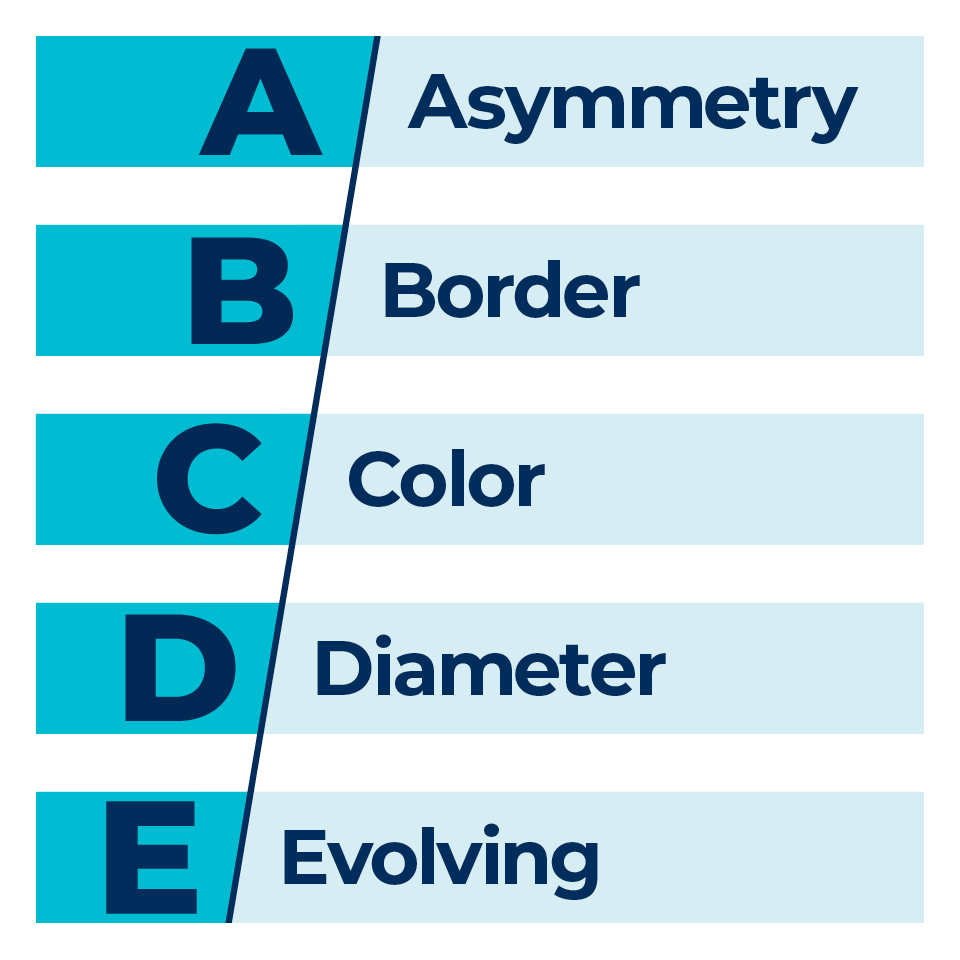
The ABCDE method for moles
Doctors use the ABCDE method for self-exams to check if a mole’s size, shape, and color show signs of melanoma.
ABCDE stands for:
- Asymmetry. One half of the mole does not match the other.
- Border. Uneven or irregular edges.
- Color. Multiple colors, such as brown, tan, or black, or uneven shading.
- Diameter. Larger than 6mm (about the size of a pencil eraser).
- Evolving. Changes in size, shape, or color.
When should a doctor remove a mole?
You and your doctor can decide how to remove a mole that is noncancerous. You may also choose not to remove it. Reasons for mole removal may include:
- Cosmetic. Removing moles from highly visible areas, such as the face, neck, arms, or hands.
- Discomfort. Removing moles that cause irritation, such as rubbing against clothing.
- Preventive care. Removing moles that may increase the risk of skin cancer.
Keeping up with your annual physical exam is also important. Your primary care doctor checks your skin and nails during the exam.
Schedule an appointment with your doctor if a mole changes, becomes painful or itchy, or bleeds.
How is a noncancerous mole removed?
Noncancerous mole removal is done in a doctor’s office. It is typically quick and causes little discomfort and minimal scarring. The most common procedures are freezing, shave excision, and surgical excision. You and your doctor will discuss the best way to remove one or more moles. They will explain what to expect during and after your procedure. If you want to consider laser removal, your doctor can refer you to a dermatologist.
Before mole removal, your doctor will clean the area and numb it with a local anesthetic injection to minimize pain.
Freezing (Cryotherapy) (surface skin moles)
- Liquid nitrogen freezes off the mole.
Shave excision (raised moles and soft moles)
- The mole is removed layer by layer with a scalpel.
- The procedure typically does not require stitches.
- The area around the mole may be burned (cauterized) to minimize scarring.
Surgical excision (moles deeper in the skin)
- The entire mole and a margin of healthy skin is removed by a scalpel.
- The area may be cauterized before stitching to stop bleeding.
What happens after a mole removal procedure?
Your doctor will give you instructions on how to clean the area to promote faster healing and prevent infection. Keep the area covered, dry, and protected from the sun.
You can return to most daily activities immediately or within 48 hours. You may experience tenderness or soreness. Full recovery and healing can take one to three weeks depending on the type of procedure. Call your doctor before your follow-up appointment if you have questions or notice signs of an infection.
How can I keep my skin healthy?
Caring for your skin is an important part of your health journey. Knowing when to see a doctor about a mole can help reduce your risk of skin cancer.
- Schedule an annual physical exam with your primary care doctor to monitor year-to-year changes.
- Check for unusual moles with a monthly self-exam using the ABCDE method. Do not remove a mole by yourself.
Start with primary care
Your primary care doctor can take a look and help decide if mole removal is right for you.