
Program Highlights
Timeline of Innovation
1970s | The Origins of Reperfusion Therapy
- Among the first centers to perform intracoronary thrombolysis for acute myocardial infarction
- Early pioneers included Drs. Seymour Gordon and Gerald Timmis
- Contributed to the development of modern reperfusion strategies
1980s–1990s | The Interventional Revolution
- Recruitment of nationally recognized leaders, including Drs. William O’Neill, Cindy Grines, Robert Safian, James Goldstein, and Simon Dixon
- Led the landmark PAMI Trial, establishing angioplasty as standard therapy for acute myocardial infarction
- Advances in coronary stents, atherectomy, and laser PCI
- Development of systems of care for cardiogenic shock and acute myocardial infarction
- Early adoption of coronary stenting and participation in numerous device trials
2000s | Structural Heart & Advanced Therapies
- 2005: First hospital in North America to perform transcatheter aortic valve replacement (TAVR)
- 2005: Early clinical research in left atrial appendage closure (Watchman)
- Expansion of research in novel reperfusion therapies, including hypothermia and supersaturated oxygen
- Growth of peripheral and complex vascular interventions
- First MitralClip
- Expansion of advanced cardiac imaging, including the launch of the Cardiac MRI program
2006–2015 | The Emergence of Advanced Cardiac Imaging
- 2006: Launch of the cardiac CT program
- 2007: Introduction of cardiac CT for emergency department chest pain evaluation
- Early clinical research contributing to the adoption of cardiac CT as a frontline diagnostic tool
- Expansion of CT across outpatient and inpatient care, including structural heart and electrophysiology procedural planning
- Development of a high-volume, nationally recognized cardiac imaging program
2015–2020 | Integration of Physiology and Structural Innovation
- Early adoption of physiologic assessment, including FFR-CT
- Transition from anatomic imaging to combined physiologic and anatomic evaluation of coronary disease
- Growth in structural heart therapies, including mitral and transcatheter interventions
- 2015: Midwest early commercial adoption of left atrial appendage closure devices
- Expansion of electrophysiology innovation, including novel atrial fibrillation ablation and device therapies
2020–2024 | Expansion of Structural and Electrophysiology Therapies
- Broad adoption of advanced transcatheter therapies, including mitral repair and replacement
- Continued growth in structural valve interventions and complex procedures
- Expansion of electrophysiology therapies, including adoption of pulse field ablation
- 2024: Launch of transcatheter mitral valve replacement (TMVR) program
- 2024: Launch of robotic mitral valve surgery program
2025–2026 | The Era of Precision Cardiology
- Introduction of CT-based plaque quantification into clinical care
- Integration of coronary CTA, FFR-CT, and plaque analysis for risk stratification and procedural planning
- Expansion of transcatheter valve therapies, including mitral and tricuspid interventions
- Launch of renal denervation program for resistant hypertension
.jpg)
.jpg)
.jpg)
.jpg)
.jpg)
.jpg)
Clinical training facilities and volume
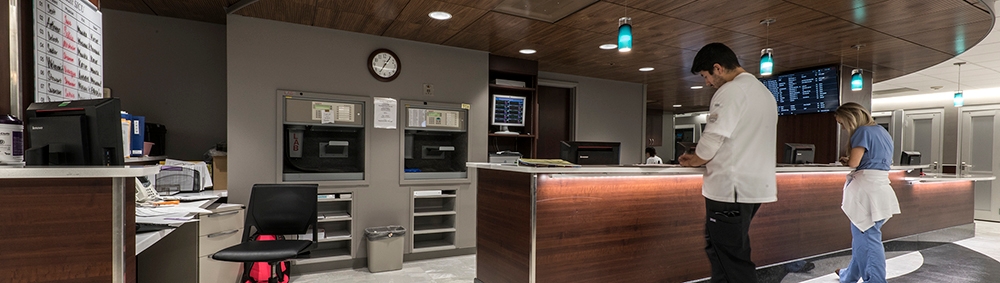
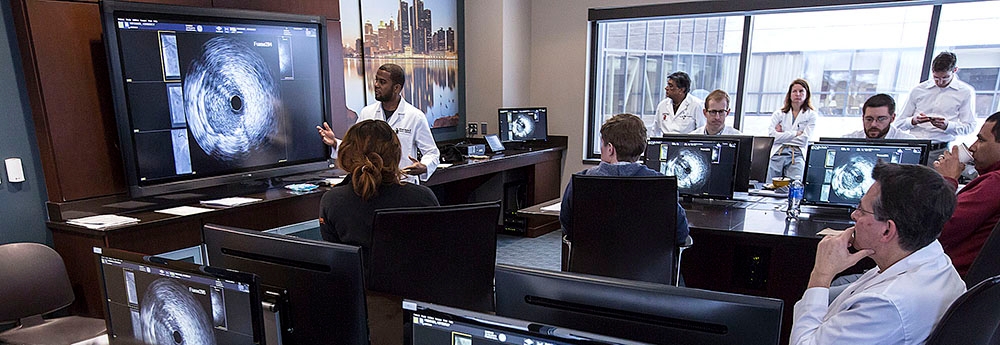
Corewell Health William Beaumont University Hospital is a 1,109-bed major academic and tertiary referral center with a Level I Adult Trauma Center. As the exclusive clinical partner of the Oakland University William Beaumont School of Medicine, the hospital serves as the primary training center for more than 500 residents and fellows across over 60 residency and fellowship programs. Cardiovascular fellows rotate through the catheterization laboratories (six labs, including a hybrid cath lab/OR) and the electrophysiology laboratories (four labs), gaining extensive exposure to a broad spectrum of diagnostic and therapeutic procedures. The echocardiography laboratory features state-of-the-art imaging equipment and resources, including a dedicated advanced TEE suite. The CCU consists of a 20-bed Cardiac Intensive Care Unit that underwent extensive renovation in 2025–2026 and is equipped with state-of-the-art technology to care for critically ill cardiovascular patients. In 2019, the Max and Debra Ernst Center opened as a dedicated specialty center for patients with advanced heart failure and complex cardiovascular disease, offering comprehensive multidisciplinary care and access to advanced therapies. The Center for Innovation and Research in Cardiovascular Diseases (CIRC) further enhances training through integrated physician education, procedural simulation, and exposure to emerging cardiovascular technologies and invasive procedures.
The Department of Cardiovascular Medicine at Corewell Health William Beaumont University Hospital performs annually:
- 1,700 percutaneous coronary interventions (PCI)
- 120 STEMI activations
- 500 catheter ablations
- 8,000 cardiac CT examinations
- 800 FFR-CT studies
- 1,400 cardiac MRI examinations
- 30,000 echocardiograms
- 170 chronic total occlusion (CTO) interventions
- 330 transcatheter aortic valve replacements (TAVR)
- >100 transcatheter mitral valve repair/replacement (mTEER/TMVR) procedures
- >30 transcatheter tricuspid valve repair/replacement (TTVR) procedures
- >160 left atrial appendage (LAA) occlusion device implantations
This exceptional clinical volume allows the fellowship program to provide premier training in both cardiovascular procedures and advanced cardiovascular imaging. In recent years, fellows have consistently achieved COCATS Level II training in cardiac catheterization, echocardiography, and cardiac CT. A unique aspect of our program is the emphasis on coronary CTA, including advanced training in CT-derived fractional flow reserve (FFR-CT) and coronary plaque assessment; rapidly evolving areas of clinical cardiology and cardiovascular research. The fellowship also offers a broad spectrum of advanced subspecialty training opportunities, including interventional cardiology, electrophysiology, advanced cardiovascular imaging, structural heart disease, and peripheral vascular intervention. During the final six months of fellowship, third-year fellows may tailor their training experience to align with their anticipated subspecialty career path. Across every area of cardiovascular medicine, fellows work closely with nationally recognized clinicians, educators, and clinical investigators, ensuring comprehensive preparation for both clinical practice and future advanced training.