

Center for Polyamine Disorders
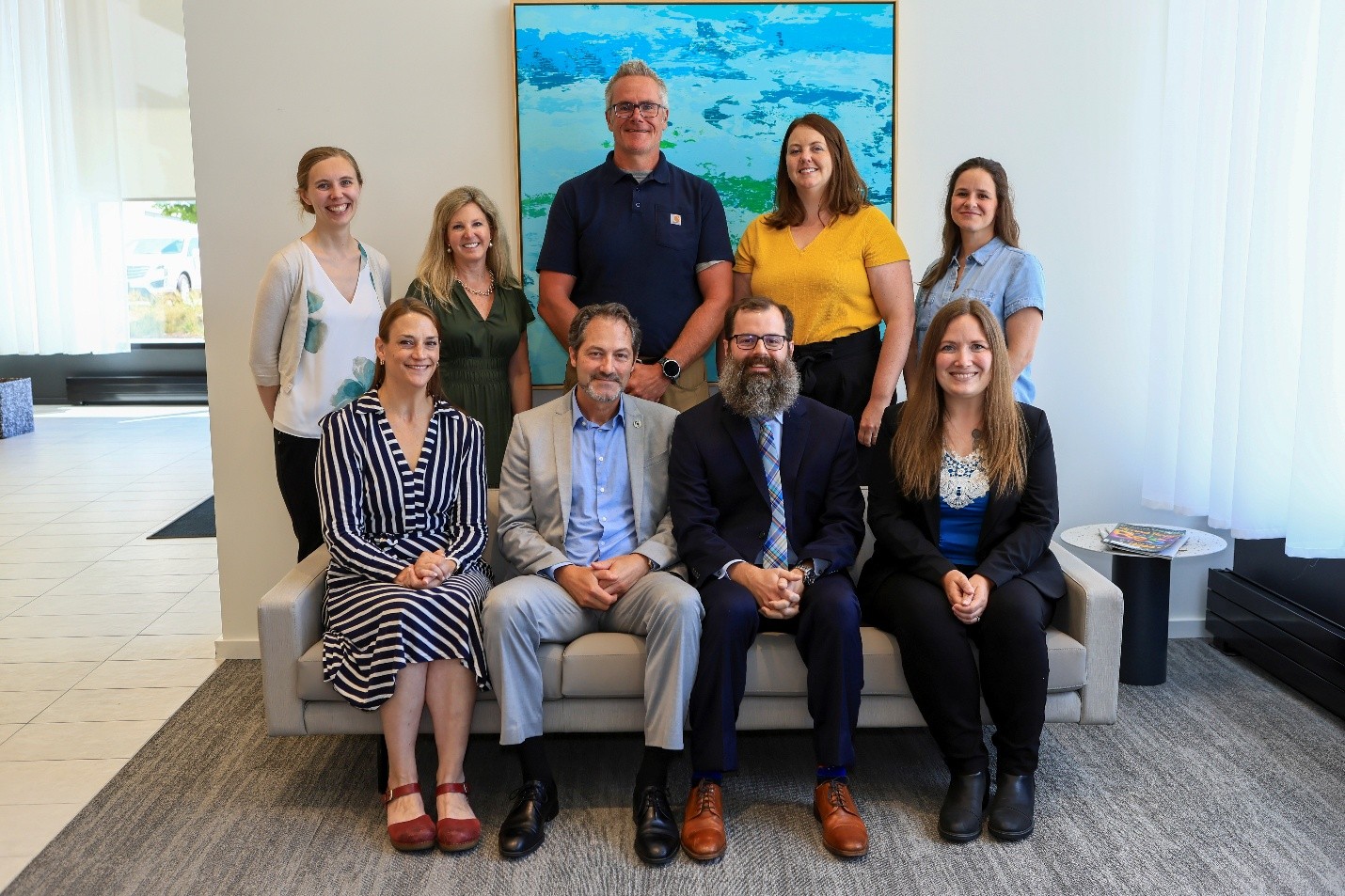
The Center for Polyamine Disorders (CPD) as part of the Rare Diseases Clinical Research Network is a collaborative translational and clinical research program operated under the auspices of Michigan State University and Corewell Health in Grand Rapids, Michigan. The CPD launched in summer 2020 and includes a polyaminopathy patient biobank, a state-of-the-art translational research lab core, and a clinical genetics team at Corewell Health. The CPD offers innovative ways to study polyaminopathies, associated disabilities, and develop strategies for treatment and prevention. This collaborative effort between Corewell Health and Michigan State University brings world-leading experts in the field from the bench and clinic together to study these rare genetic diseases.
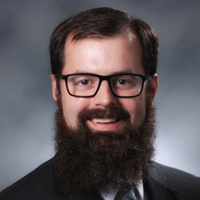
Caleb Bupp, MD, FACMG, Clinical Director CPD, Division Chief – Medical Genetics and Genomics at Corewell Health Helen DeVos Children’s Hospital

Surender Rajasekaran, MD, Research Director CPD, Medical Director of Research at Corewell Health
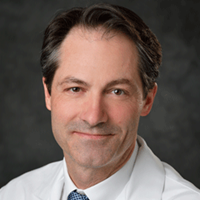
Andre Bachmann, PhD, MS, Scientific Director CPD, Professor, Associate Chair for Research in the Department of Pediatrics and Human Development and Michigan State University faculty

Charles E. Schwartz, PhD, Assistant Research Director CPD, Chair Medical and Scientific Advisory Board Snyder Robinson Foundation and Adjunct Professor, Department of Pediatrics and Human Development, Michigan State University
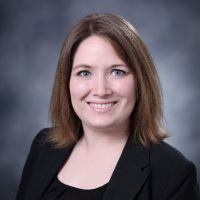
Elizabeth VanSickle, PhD, MS, Scientist - CPD, Scientist - Medical Genetics and Genomics at Corewell Health Helen DeVos Children’s Hospital
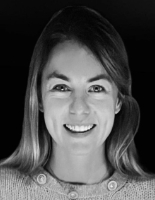
Sarah van Veen, PhD, Scientist - CPD
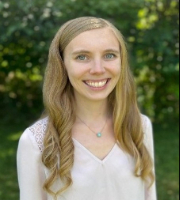
Julianne Michael, MS, LCGC, Genetic Counselor – CPD, Medical Genetics Team Lead, Division of Medical Genetics and Genomics
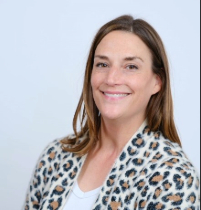
Cari Flynn, MS CGC, Program Manager – CPD, Operations Specialist – Specialty Health Research at Corewell Health Research Institute
Overview
The Bachmann-Bupp team demonstrated that both fibroblasts and red blood cells from the first patient diagnosed with Bachmann-Bupp Syndrome (BABS) (OMIM # 619075) have exceptionally high ODC (ornithine decarboxylase) enzyme levels and resulting abnormal polyamine levels. These are due to a gain-of-function mutation in the ODC1 gene. Consequently, they determined that patients with BABS may benefit from an FDA-approved drug called DFMO (an ODC inhibitor also known as eflornithine and Iwilfin). These biochemical data were published in a report by Schultz, Bupp, Rajasekaran and Bachmann in the Biochemical Journal. Currently, there are 17 known individuals with BABS worldwide, six of whom are being treated with DFMO. The Bachmann-Bupp team was also invited to coauthor two comprehensive reviews on BABS and treatment in GeneReviews and Developmental Medicine & Child Neurology. Drs. Bachmann and Bupp are globally consulted for their expertise and present their studies worldwide at conferences. The Bachmann-Bupp Family Coalition was recently founded to provide parents and families a means to communicate and share information about this rare disorder.
Before the discovery of BABS, there was one other known polyaminopathy, Snyder-Robinson Syndrome (SRS), which was first described in 1969. This condition results from variants in the spermine synthase gene (SMS) which was not discovered until 2003. SRS also results in abnormalities of polyamine levels. There are now approximately 65 males with SRS worldwide. The CPD partners closely with the Snyder-Robinson Foundation (SRF) and serves as a center for clinical evaluation and research for SRS. In 2022, the SRF hosted their impactful patient, family, and professional conference at the CPD headquarters in Grand Rapids. Also in 2022, Drs. Bupp and Bachmann, along with Dr. Robert Casero at The Johns Hopkins University, were awarded a highly competitive five-year NIH R01 award to collaboratively study BABS and SRS. Work resulting from this grant has been presented at many prestigious conferences over the past three years, including Rare Disease Day at NIH in 2024, the International Conference on Polyamines in Rome, Italy, and Kobe, Japan, the Gordon Research Conference on Polyamines in Waterville, NH, the American Physiology Summit in Baltimore, MD, the European Human Genetics Conference in Milan, Italy, and the Society of the Study of Inborn Errors of Metabolism (SSIEM) meeting in Jerusalem, Israel.
Since the identification of BABS, three other conditions in the polyamine pathway have been described: DHPS deficiency (OMIM #618480), Faundes-Banka syndrome (OMIM #619376), and DOHH disorder (OMIM # 620066). Additionally, there is the potential for other novel conditions associated with genes in the polyamine pathway yet to be recognized, all of which would fall under the umbrella of the CPD’s scope of work. The CPD serves as the worldwide nexus for comprehensive data/sample collection and scientific information about polyamine-associated diseases.
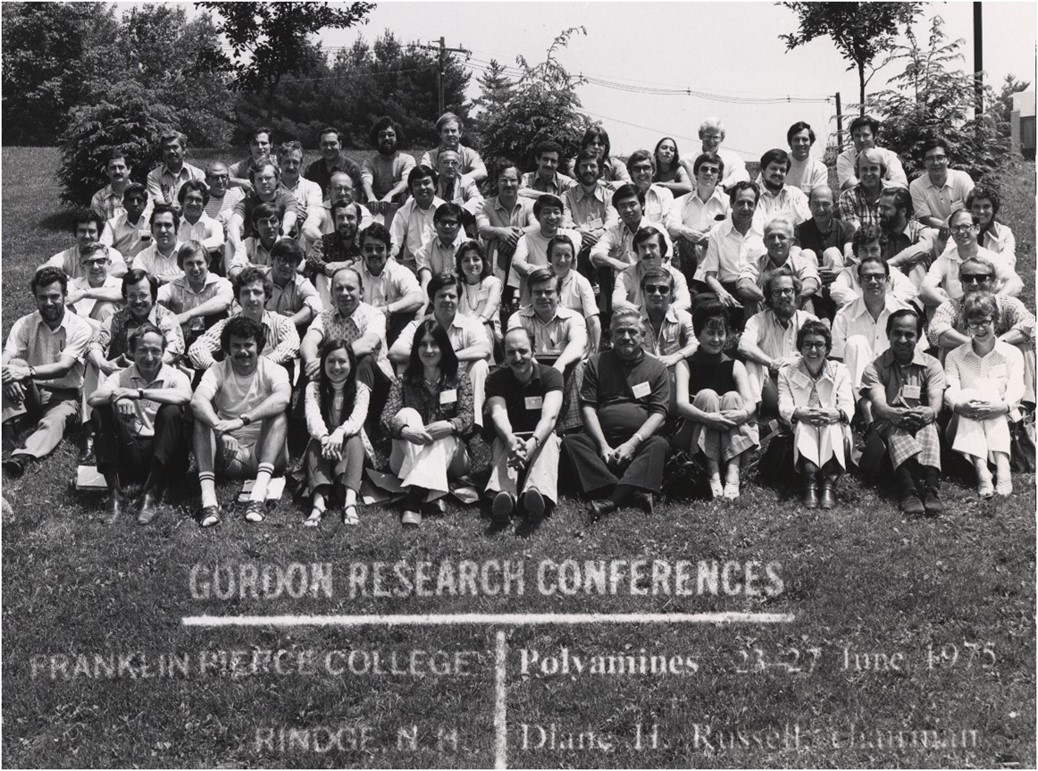
2027 Gordon Research Conference: Advancing Polyamine Research and Therapeutics
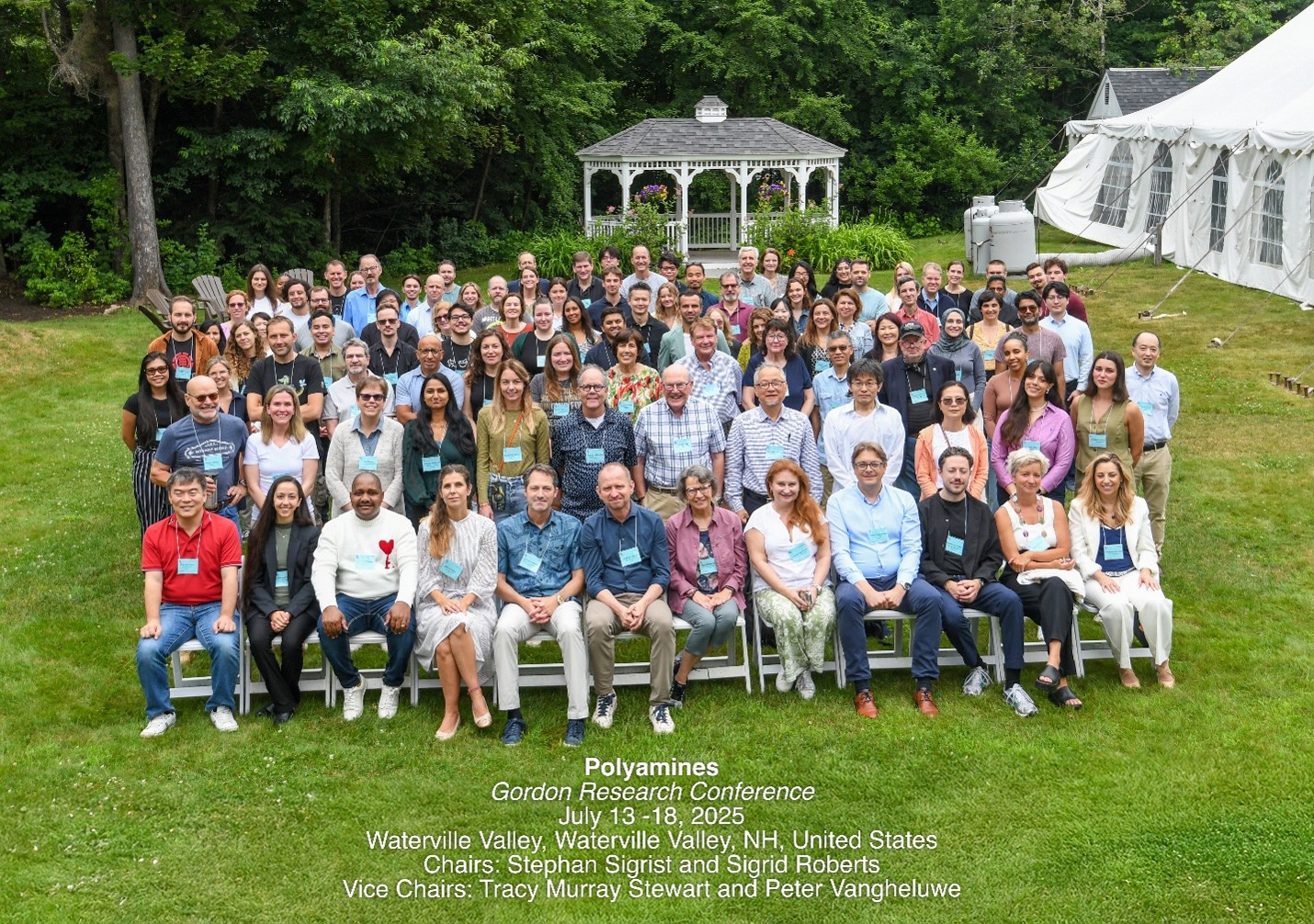
The 2027 conference will focus on how polyamine metabolism, transport, compartmentalization, and signaling regular fundamental cellular processes, including organelle function, signaling, cell fate decisions, and stress responses. This international conference attracts leading scientists and physicians from around the globe and will again be held in Waterville Valley, New Hampshire from July 18 to 23, 2027. Dr. Bachmann was the conference chair in 2023 and in 2025 chaired the medical genetic session. Dr. Bupp has attended and presented at this premier conference several times and Dr. VanSickle was an invited speaker in 2025.
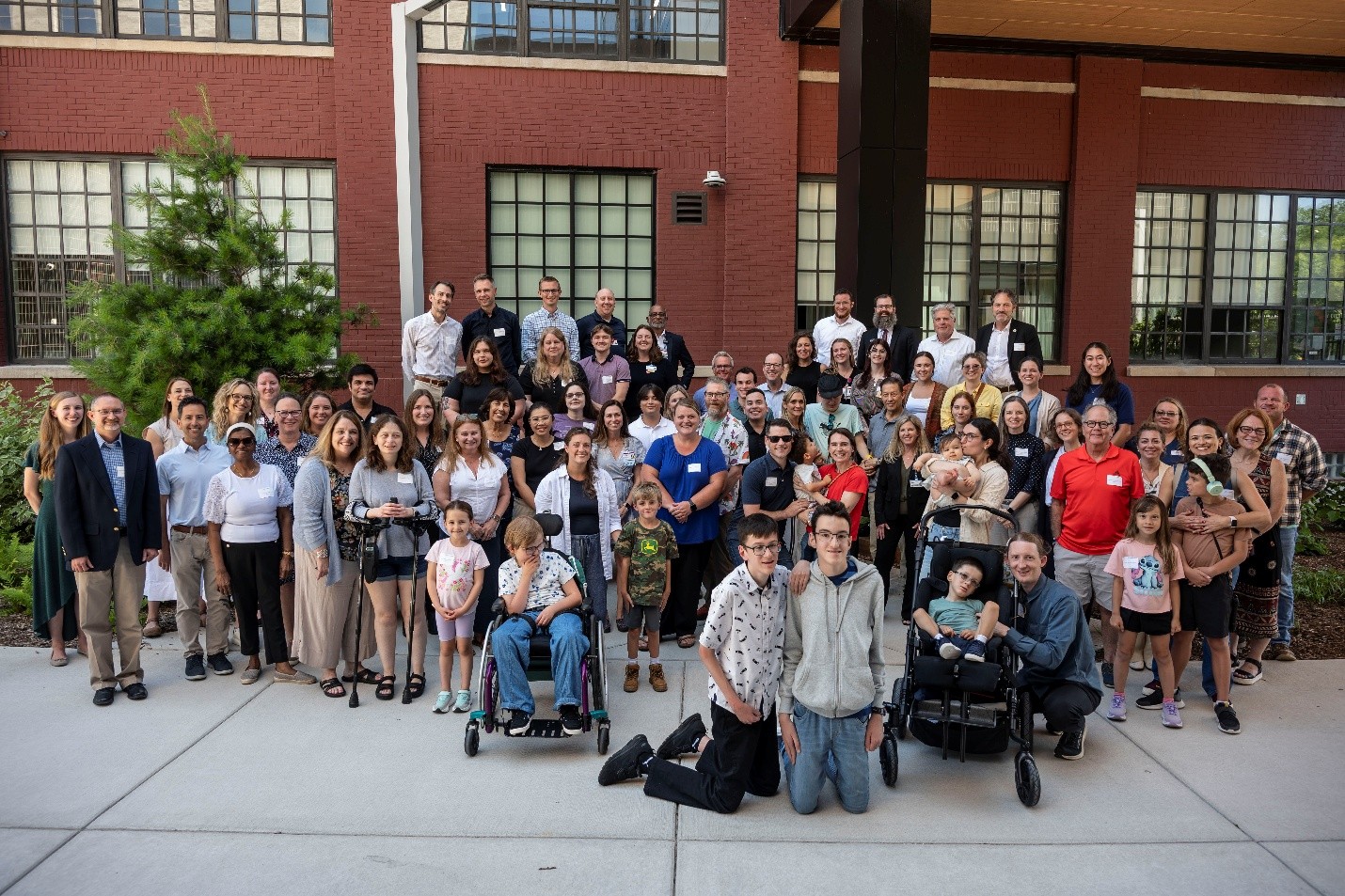
2026 Center for Polyamine Disorders Conference
The CPD held the 2nd biennial collaborative conference in Grand Rapids, Michigan on July 13 and 14. We look forward to hosting this event again in the summer of 2028. Please contact Cari Flynn at icpd@corewellhealth.org with any questions or to be added to future communications.
Awards
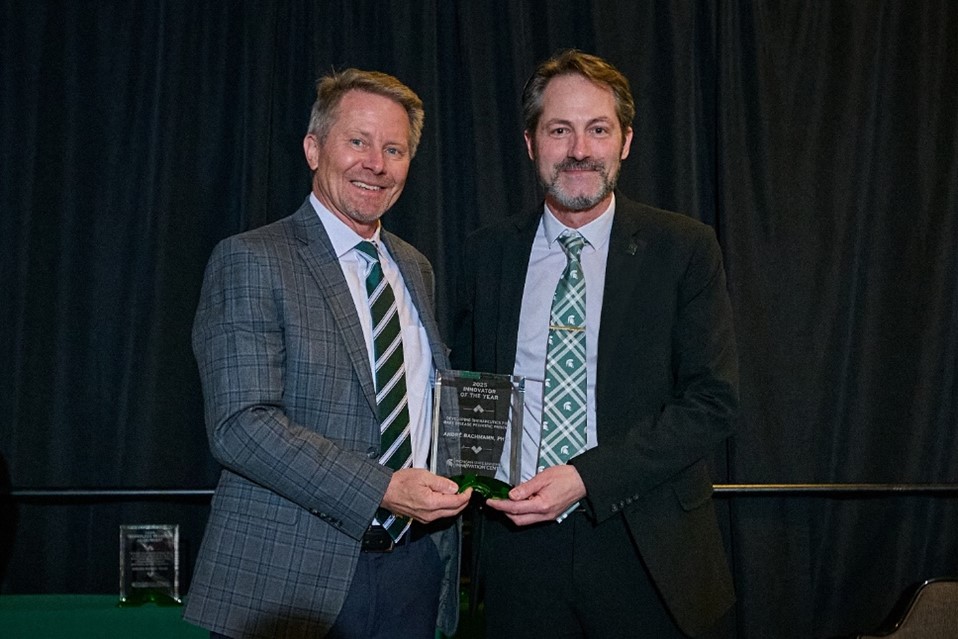
2025 MSU Innovator of the Year (Dr. André Bachmann)
2024 Induction as a Senior Member of the National Academy of Inventors (NAI) (Dr. André Bachmann)
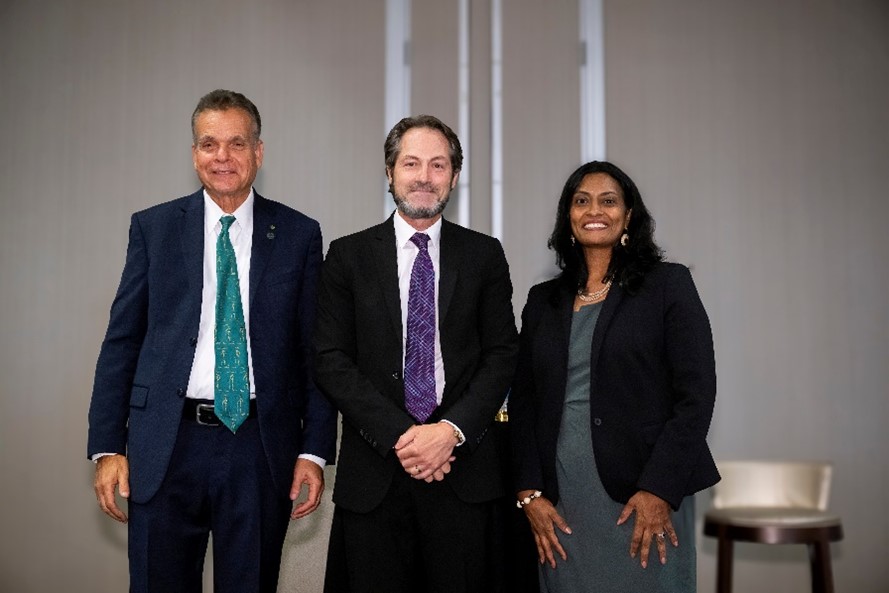
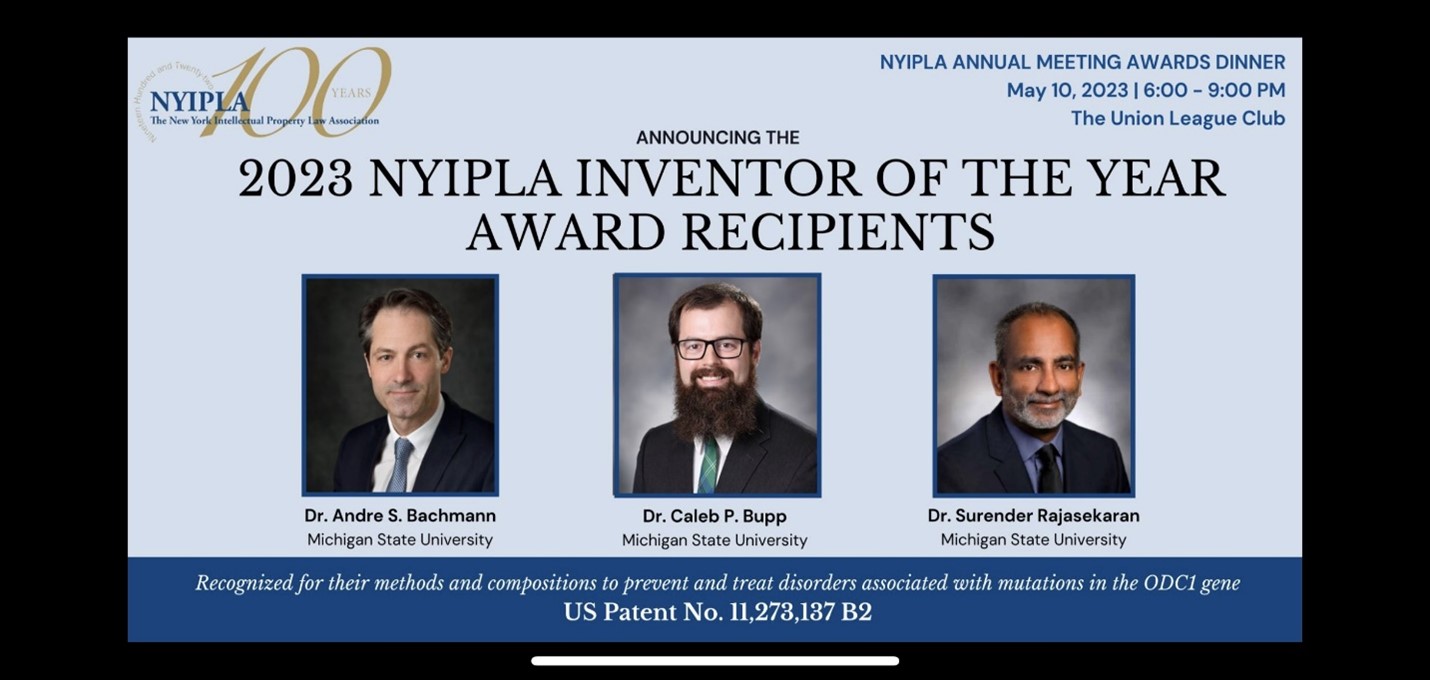
2023 NYIPLA Inventor of the Year Award (Drs. Andre Bachmann, Caleb Bupp, and Surender Rajasekaran)
Additional awards
2024 Crain’s Detroit Business Healthcare Hero (Dr. Caleb Bupp)
Publications
Five Known Polyaminopathies: A Critical Narrative Review. Am J Med Genet A. 2026 May;200(5):993-1003. doi: 10.1002/ajmga.70029. Epub 2025 Dec 18. PMID: 41410504, https:/pubmed.ncbi.nlm.nih.gov/41410504/
Matthew A. Swanson, Carlye Szarowicz, Schuyler T. Pike, Chad R. Schultz, André S. Bachmann, Thomas Dowling, Novel LC-MS/MS assay to quantify D,L-alpha-difluoromethylornithine (DFMO) in mouse plasma. Methods in Enzymology, Academic Press, 2025, ISSN 0076-6879, https://doi.org/10.1016/bs.mie.2025.01.036
Chad R. Schultz, Elizabeth A. VanSickle, Caleb P. Bupp, André S. Bachmann, Monitoring ODC activity and polyamines in Bachmann-Bupp syndrome patient biological samples, Methods in Enzymology, Academic Press, 2025, ISSN 0076-6879, https://doi.org/10.1016/bs.mie.2025.01.071.
Elizabeth A. VanSickle, Chad R. Schultz, André S. Bachmann, Caleb P. Bupp, Collection, preparation, and biobanking of clinical specimens for analysis in polyaminopathies, Methods in Enzymology, Academic Press, 2025, ISSN 0076-6879, https://doi.org/10.1016/bs.mie.2025.01.073.
Bupp, C. P., VanSickle, E. A., Michael, J., Schultz, C. R., Nguyen, K., Hoefer, M., Rajasekaran, S., & Bachmann, A. S. (2025). Repurposing With Purpose: Treatment of Bachmann-Bupp Syndrome With Eflornithine and Implications for Other Polyaminopathies. American journal of medical genetics. Part C, Seminars in medical genetics, e32138. Advance online publication. https://doi.org/10.1002/ajmg.c.32138
Bachmann AS, VanSickle EA, Michael J, Vipond M, Bupp CP. Bachmann-Bupp syndrome and treatment. Dev Med Child Neurol. 2024;66(4):445-455. doi:10.1111/dmcn.15687
Michael J, VanSickle E, Vipond M, et al. Two New Cases of Bachmann-Bupp Syndrome Identified through the International Center for Polyamine Disorders. Med Sci (Basel). 2023;11(2):29. Published 2023 Apr 4. doi:10.3390/medsci11020029
Afrin A, Afshan TS, VanSickle EA, Michael J, Laarman RL, Bupp CP. Improvement of dermatological symptoms in patients with Bachmann-Bupp syndrome using difluoromethylornithine treatment. Pediatr Dermatol. 2023;40(3):528-531. doi:10.1111/pde.15187
Bupp C, Michael J, VanSickle E, Rajasekaran S, Bachmann AS. Bachmann-Bupp Syndrome. In: Adam MP, Feldman J, Mirzaa GM, Pagon RA, Wallace SE, Amemiya A, eds. GeneReviews®. Seattle (WA): University of Washington, Seattle; August 25, 2022.
VanSickle EA, Michael J, Bachmann AS, Rajasekaran S, Prokop JW, Kuzniecky R, Hofstede FC, Steindl K, Rauch A, Lipson MH, Bupp CP. Expanding the phenotype – four new cases and hope for treatment in Bachmann-Bupp Syndrome. American Journal of Medical Genetics: Part A. (2021)
Prokop JW, Bupp CP, Frisch A, Bilinovich SM, Campbell DB, Vogt D, Schultz CR, Uhl KL, VanSickle EA, Rajasekaran S, Bachmann AS. Emerging Role of ODC1 in Neurodevelopmental Disorders and Brain Development. Genes. (2021)
Rajasekaran S, Bupp CP, Leimanis-Laurens M, Shukla A, Russell C, Junewick J, Gleason E, VanSickle EA, Edgerly Y, Wittmann BM, Prokop JW, Bachmann AS. Repurposing eflornithine to treat a patient with a rare ODC1 gain-of-function variant disease. eLife. (2021)
Schultz CR, Bupp CP, Rajasekaran S, Bachmann AS. Biochemical features of primary cells from a pediatric patient with a gain-of-function ODC1 genetic mutation. Biochem J. 2019;476(14):2047-2057. PMID: 31249027
Bachmann AS, Geerts D. Polyamine Synthesis as a target of MYC oncogenes. J Biol Chem. 2018;293(48):18757-18769. PMID: 30404920
Bupp CP, Schultz CR, Uhl KL, Rajasekaran S, Bachmann AS. Novel de novo pathogenic variant in the ODC1 gene in a girl with developmental delay, alopecia, and dysmorphic features. Am J Med Genet A. 2018;176(12):2548-2553. PMID: 30239107
Contact us
We look forward to hearing from you!