



Care when every second counts
Aero Med provides emergency scene response, critical care transport between facilities, and specialty services for critically ill and traumatically injured patients across Michigan, including neonatal transport, high risk obstetrics, and support for mechanical circulatory assist devices.
Our highly trained pilots, flight nurses, communication specialists, and mechanics work together to ensure rapid, life-saving care before and during transport.
Our two Sikorsky S 76 helicopters feature custom medical interiors and equipment, a cruising speed of 155 mph, a range of more than 400 miles, and electronic systems (avionics) that allow for safe operations in a wide range of conditions. We are staffed, on duty, and standing by 24 hours a day, 7 days per week.

Corewell Health Aero Med is operated by “Spectrum Health Hospitals” and maintains an FAA Part 135 Air Carrier Certificate.
We are nationally recognized and accredited by the Commission on Accreditation of Medical Transport Systems (CAMTS), reflecting our commitment to safety, quality, and excellence in critical care transport.
Services we provide
Aero Med provides destination‑level care during transport for patients experiencing time‑sensitive emergencies, including trauma and critical medical conditions.
Emergency scene and trauma response
We provide on-scene critical care for medical emergencies and trauma, including advanced assessment, medication administration, and life-saving procedures such as rapid sequence intubation, heated blood transfusions (including whole blood, packed red blood cells, and liquid plasma), chest tube insertion, pericardiocentesis, and mechanical chest compressions (LUCAS device). Our flight communicators coordinate with first responders on the ground to secure an appropriate landing zone.
Interfacility and specialty care transport
We transport babies, children, and adults between medical facilities when they require advanced critical care during transport. We can accommodate patients requiring advanced cardiac or mechanical circulatory support such as extracorporeal membrane oxygenation (ECMO) therapy, as well as newborns requiring isolette transport.
Our team
Each crew consists of one pilot and two critical care flight nurses. They are supported by a dedicated team of flight communications specialists, maintenance professionals, and operational leadership, including team members with prior military experience, working behind the scenes to ensure safe, seamless transport.
Pilots
Our highly trained and experienced pilots are Airline Transport Pilot (ATP) certified, Instrument Flight Rules (IFR) rated, and complete flight-simulator training every six months. Each pilot maintains full authority to accept, delay, or cancel a flight based on weather conditions or if there is a safety concern.
Medical team
All flight nurses are dual-licensed registered nurses (RNs) and paramedics with Certified Flight Registered Nurse (CFRN) certification, who specialize in transporting critically ill and injured patients. Our medical team participates in ongoing skills trainings and clinical education, and maintains certifications in advanced cardiac life support, pediatric advanced life support, neonatal resuscitation, and transporting individuals with advanced trauma.
Flight communications specialists
Flight Communications Specialists serve as the single point of contact for all transports, providing comprehensive coordination throughout each transport. They monitor the aircraft’s location and status in real time and manage every logistical detail. Each team member maintains the Certified Flight Communicator (CFC) certification, ensuring a high standard of expertise and operational safety.
Maintenance
Our in-house maintenance crew ensures that all aircraft in the fleet meet the highest standards of safety, reliability, and regulatory compliance. All members are FAA-licensed airframe and powerplant mechanics who have been factory-trained on all Aero Med aircraft and engines.
How to request Aero Med
Call 800.862.0921 for air transportScene response
Launch requests can be initiated by any scene responder — law enforcement, fire departments, EMS personnel, and dispatch centers.
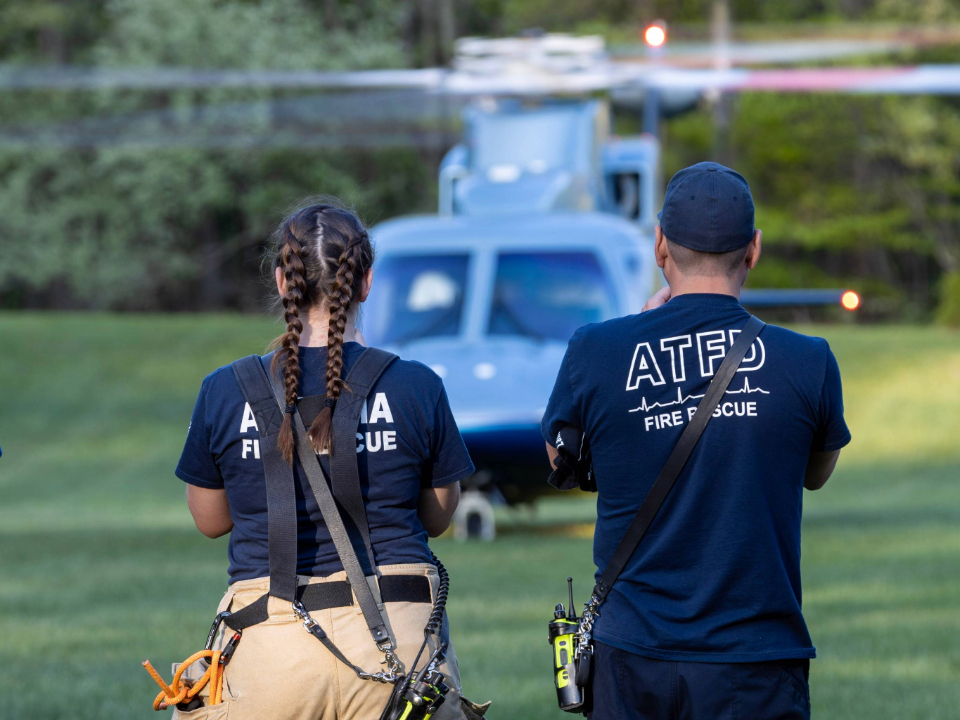
Please provide relevant information to the flight dispatcher as soon as it is available, including:
- Location (address or intersection)
- Landing zone information — landing zones must be established by local fire departments and emergency first responders at the scene
- Nature of the call
- Number and age of patients
- Responding emergency departments
- Any known hazards at the scene
Aero Med may elect to auto-launch depending on the information provided to the flight dispatcher. The aircraft will proceed to the vicinity of the scene but will wait to land until requested to do.
Once EMS is on scene, if the clinical situation does not require critical care or air transport, notify the flight communications specialist to cancel the aircraft request. There is no cost to the patient or the responding agencies for making or canceling a request.
Requesting interfacility transport
Air transport between hospitals can be initiated by hospitals and transfer centers by calling the Flight Communications Center. Air medical transport should be considered when a patient requires ongoing critical care, advanced clinical interventions, or accelerated transport due to conditions such as heart attack, stroke, surgical emergencies, or traumatic injury. Our flight team delivers the same high‑level care found in a destination hospital throughout the entire transport.
Please provide relevant transfer information to the dispatcher including: patient information, receiving hospital and department, nature of patient condition, and their weight. Our team will walk you through everything that is needed to get our team launched and in the air to you.