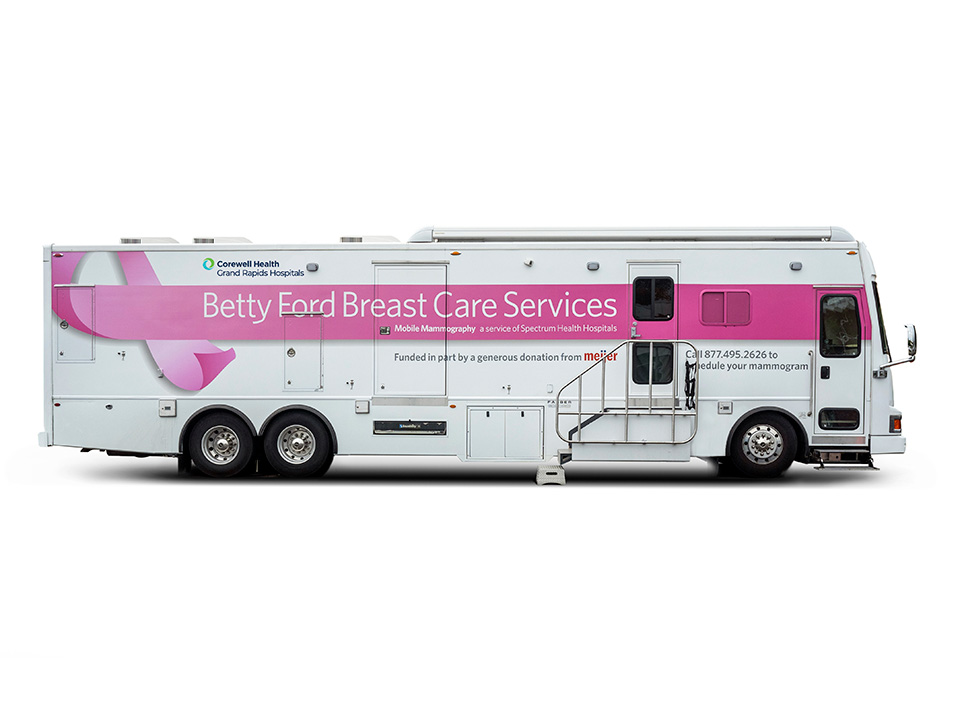
Mammogram
3D mammogram (tomosynthesis) is the modern standard for advanced breast imaging used to improve cancer detection, especially in women with dense breasts. The machine takes multiple low-dose X-rays to create a detailed 3D picture of inside the breast from multiple angles. Doctors recommend that women age 40 and older get a mammogram every year.
Contrast-enhanced mammogram (CEM)
A contrast-enhanced mammogram is a type of breast imaging. It combines a standard mammogram with a special contrast dye. The dye helps show blood flow in the breast. This can make areas that may be cancer easier to see. It may be used when more details are needed to guide diagnosis and care.
Diagnostic mammogram
A diagnostic mammogram is a breast imaging test used to look more closely at a lump, area of pain, or something identified on a routine screening mammogram. It may be done on its own or with a breast ultrasound. A radiologist reviews the images to decide if more detailed views or further evaluation are needed.
Breast magnetic resonance imaging (MRI)
If you have dense breasts or an elevated risk of breast cancer, a breast MRI might be recommended in addition to your annual mammogram.
Abbreviated breast magnetic resonance imaging (AB-MRI)
An AB-MRI is a shortened version of standard breast MRI often recommended for women with dense breasts or an average-to-intermediate risk of breast cancer.
Breast ultrasound
Ultrasounds use high-frequency sound waves to create images of breast tissue. An ultrasound may be recommended for women with dense breasts or if something was detected on a mammogram that needs a closer look.
Automated whole breast ultrasound (ABUS)
This test is an extra screening exam. It uses an automated system that scans the entire breast with sound waves to create clear 3D images of the breast and is noninvasive. It can be used together with a screening mammogram for patients with dense breast tissue.