

Pharmacy Residency Program at Troy






The PGY1 Program at Troy will not be recruiting residents for the 2027-2028 residency year and has no positions available during this cycle. The program remains ASHP accredited.
Corewell Health Beaumont Troy Hospital offers a twelve-month American Society of Health-System Pharmacists (ASHP)-accredited PGY-1 residency for up to two residency candidates.
The goals of the residency program are to train pharmacists to develop the skills necessary to ensure optimal delivery of drug therapy to all patients, and to analyze and disseminate drug information to health care professionals and patients. Other goals are for residents to investigate therapeutic problems in a scientific manner, enhance their verbal and written communication skills, and to become leaders in the medication use process.
PGY1 pharmacy residency programs build on doctor of pharmacy (Pharm.D.) education and outcomes to contribute to the development of clinical pharmacists responsible for medication-related care of patients with a wide range of conditions, eligible for board certification, and eligible for postgraduate year two (PGY2) pharmacy residency training.
The pharmacy department utilizes an integrative practice model where pharmacists are responsible for both distributive and clinical functions. Currently, there is a central pharmacy, two operating room satellite pharmacies, and an emergency center satellite pharmacy.
Pharmacy personnel
Corewell Health Beaumont Troy Hospital has a longstanding tradition of providing excellent clinical services. Pharmacists at Corewell Health Beaumont Troy Hospital provide decentralized, inpatient care as well as pharmacokinetic dosing and monitoring of antibiotics and anticoagulants and nutrition support. The pharmacy specialty areas include: ambulatory care, antimicrobial stewardship, critical care, emergency medicine, medicine, surgical services, and oncology.
Corewell Health pharmacists are also actively involved in the precepting of doctor of pharmacy students. Numerous pharmacy staff have adjunct faculty appointments with colleges of pharmacy from across the nation.
Pharmacy residency
Each year Troy accepts two new pharmacy practice residents to the program. A PGY-1 residency at provides:
- Training in a 520-bed acute-care, community-teaching hospital and associated ambulatory care practices
- Pharmacy department personnel who are committed to education, patient care and research
- Highly-trained and passionate clinical specialists as preceptors
- A layered learning model with IPPE and APPE pharmacy model
- A year of continual longitudinal development and growth
The residency year is composed of a well-balanced combination of direct and indirect patient care rotations. The first rotation, introduction to hospital pharmacy practice (6-weeks), is designed to give the resident a strong foundation in clinical and operational pharmacy services. There are a total of 11 additional month long rotations.
| Required Experiences | Elective Experiences |
| Antimicrobial Stewardship | Ambulatory Care |
| Clinical and Operational Staffing (Longitudinal and Month of December) | Ambulatory Infusion Center |
| Critical Care (Cardiac, Medical, Surgical, or Medical-Surgical) | Critical Care (Additional) |
| Drug Information/Medication Safety | Emergency Medicine PM (Afternoons) |
| Emergency Medicine | Hematology/Oncology |
| Introduction to Hospital Pharmacy Practice | Nutritional Support |
| Pharmacy Administration | Operational and Clinical Pharmacy Services |
| Surgical Services |
The residency program partners with the Wayne State University Pharmacy Resident Teaching Certificate Program. The resident also gains teaching experience by directly precepting I-PPE students from Wayne State University for a semester, as well as mentoring A-PPE students through a layered learning model during rotations.
Research
The resident will conduct a Medication Utilization Evaluation (MUE) and a major research project. MUE results have historically been presented as a poster presentation at the ASHP Midyear Conference and major research results have historically been presented at a regional residency conference such as OPRC. The resident is required to provide a manuscript of research results suitable for publication.
How many residency positions will you be matching?
Two
When does the residency start?
Late June.
How are residents evaluated?
Residency preceptors will evaluate residents continuously throughout their learning experiences through verbal and written evaluations. At the completion of a learning experience the preceptor will evaluate the resident with a summative evaluation form specific for that learning experience. Preceptors will use the ASHP "PGY1 Required and Elective Educational Objectives Criteria for Measuring Resident Performance" as a guide to complete the summative evaluation forms.
What teaching opportunities are there for residents?
Each resident will precept Wayne State IPPE students for one semester. In addition, residents will be expected to play an active role in precepting APPE students who are scheduled on rotation with them through a layered learning model. Residents also participate in the Wayne State Teaching Certificate program.
What is the staffing requirement?
Residents will staff a hybrid operational and clinical shift every other weekend.
Do residents receive vacation time?
Resident will accrue PTO time throughout the year. 'Scheduled' PTO days may be requested on a special request form that is submitted to the residency program director in advance of the requested time off. No more than 2 PTO days (including unexpected PTO/call-in) may be taken in the same rotation. Any exceptions to this must be approved by RPD and/or TRAC group.
Do the residents attend any professional meetings throughout the year?
Historically our residents have been required to attend the ASHP midyear clinical meeting in December, as well as a pharmacy residency conference in the spring. One national conference is considered required pending discretionary organizational travel approval.
Is office space available to residents?
Yes. Residents are provided with an office space with available computers.
What type of benefit package is provided to residents?
- Earned PTO (planned time off)
- Library access
- Dedicated resident office space with individual workstation
- Pharmacy continuing education
- Free parking
- Mentoring program
- Health care benefits coverage includes optional medical, dental, vision, prescription drug, life and disability insurance
- Travel: Approved travel to conferences is at the discretion of the organization. Previously attended conferences included ASHP Midyear Clinical Meeting and a regional pharmacy residency conference. If travel is approved, paid expenses (hotel, registration, meals, transportation) will typically be approved up to $3,000 annually. If total expenses are expected to exceed $3,000, approval will be determined on a case-by-case basis
Residents will have the following national holidays off:
- July 4th
- Labor Day
- Thanksgiving Day
- Christmas Day
- New Years Day
- Martin Luther King Jr. Day
- Memorial Day
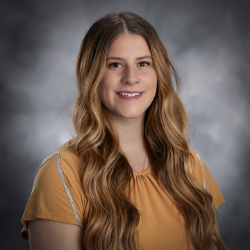
Macy Schupp, PharmD
Wayne State University College of Pharmacy and Health Sciences
Clinical interests: Emergency medicine, critical care, toxicology, trauma
Personal interests: Reading, swimming, hanging out with friends

Brent Zahn, PharmD
University of Michigan
Clinical interests: Oncology, psychology, pharmacogenomics
Personal interests: Reading, building Lego with my children, and cooking